“Meditators since the beginning of time have known they must use their own eyes and the language of their own times to express their insight. Wisdom is a living stream, not an icon to be preserved in a museum.”
– Thich “Thay” Naht Hanh, “The Sun, My Heart” Introduction

Growing up Catholic, I am familiar with the concept of original sin. I believe it is one of the most misunderstood (often intentionally so) concepts in theology. Many look back on their experience believing they were taught that they were born evil and should feel guilty about it. Some probably were, and some view their lessons in original sin as an important instrument in their very real experience of religious trauma. The Adam and Eve story has certainly done its own damage, many throughout the course of history pointing to it to suggest the natural weakness of women and their role as temptresses of sin. Patriarchal societies find this to be easy ammunition for the subjugation of women.
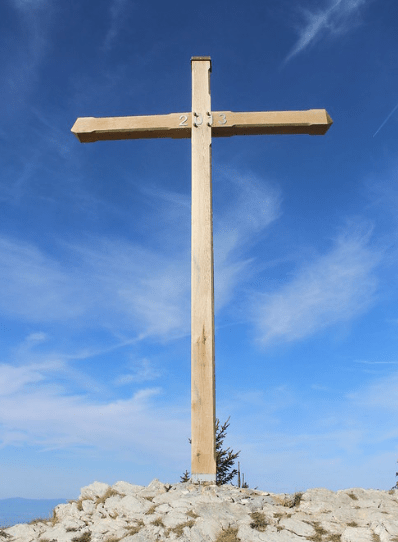
I’d like to share my new a viewpoint for this concept of “original sin” that sees it as a rich insight into the nature of the human condition. It seems, using religious language, we are born outside of a proper relationship with God; and to apply more secular language, our natural instincts lead us to pursue things that will only make us suffer. (Note: I believe both of these statements are equivalent and only semantically different. You may choose the one you are most comfortable with, or as Thay would challenge you to do, use your own wisdom and experience to find the words that speak this truth to you.)
How is it so, that so many have observed we are born into a path that leads us to suffer? Think about a newborn infant. As a person trained in pediatric medicine, I know there is no more encouraging sign than a baby who rockets into this world and begins life with a passionate, vigorous cry. The lungs expand and a life-long process of oxygenating the blood to spread throughout the rest of the body begins. Something that looks like (and is truly) the most unpleasant experience (that first experience of being cold, of physical pain, and sensation of suffocation that drives the necessary process of breathing) are our first experiences of this world.
But I believe it goes far beyond that. That newborn, once calmed (and even during those intense first moments), is experiencing the most authentic perception of reality (the true essence of Zen) – the true Beginner’s mind that is the pursuit of a Zen practitioner. There is no judgement, no dualism of thought. There is the true experience of “non-self” because they have no concept of what a self is or that they might be somehow separate from what they perceive. Original sin comes later. That infant begins to understand that some sensations are pleasant and some are unpleasant. The onset of dualism is unavoidable, it is the original sin we all commit even though there is no way around it. Furthermore, the inevitable conclusion is, “I am here to experience the pleasant things, and shun the unpleasant. If I can simply rid my life of the unpleasant experiences and sensations and, I can finally be happy!”
It is this error in logic that leads to suffering in this life. The pursuit of pleasure and avoidance of all undesirable perceptions seems logical, and many live an entire lifetime never shedding this belief that that path leads us to exist happily as a human. The reason it cannot is that we cannot escape suffering. This is dukkha in Buddhism. Many believe that the Buddha said, “existence is suffering.” My understanding is a better interpretation is that existence is unsatisfying and uneasy, not necessarily painful or unhappy, although it certainly can be sometimes. Original sin and dukkha get at equivalent concepts in my mind, that our natural desires lead us to an unsatisfying experience and requires a retraining of our minds to escape that trap. But how do we do that?
The story of Siddhartha Gautama (the Buddha’s original name) is one of a rich, entitled prince whose father sought to shield him from experiencing suffering, not even allowing him to observe the process of aging, switching out his servants and those around him to present a picture of eternal youth.
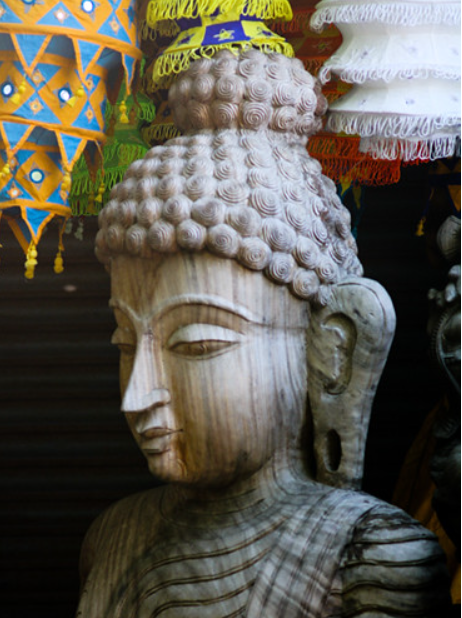
The first time he encountered an elderly man, he was confused and did not understand what he was seeing. He left to explore many paths to understand this experience of aging, disease, and death that he learned about later than most. He tried a variety of paths – pure hedonism and pursuit of pleasure, pure asceticism and denial of desires. Eventually, passing through suffering he learned the path out and adopted and taught others what is known as “the Middle Way.” Resisting all desires increases suffering. Pleasure is not to be avoided but not to be clung to. Understanding the true nature of our suffering and desires, allows us to live in a way in tune with the reality of our nature. To live in Buddha mind, Christ consciousness, or simply live a balanced life.
Why are we like this? What’s the point of making the Tree in the first place, God? Why does every insight I have into the reality of human nature just seem to lead to more questions? Seriously why, I’m pretty stuck here. I’d like to share some pithy allegory from Buddha or Jesus or Thay or Ram Dass, but I’m coming up dry. Even the modern poet, philosopher, theologian, and self-admitted megalomaniac Bono of U2 once said, “Once we are born/ we being to forget/ the very reason we came,” but fails to explain to us why that is. I just spent a ton of money to see you perform in Las Vegas with your little band, Paul! I’m expecting some serious answers to these plaguing questions, or I ain’t buying a bobblehead or T-shirt!
 Two Shadows