Important to know about me: I’m an epidemiologist. Basically I specialize in data. My specialty is what gave us the hierarchy of evidence. Evidence-based decision making for me includes a consideration of evidence quality. When asked what my TED Talk would be about, my response is, “How to make evidence-based decisions, and how to decide when the evidence is lacking.”

Given that background, what am I doing writing a blog about spirituality? Don’t get me wrong, I am generally a skeptic but that doesn’t mean I’m close-minded. I evaluate every claim based on the available evidence to support it. The top of the pyramid [Randomized-Controlled Trials (RCT)] represents the best evidence and is also rarest because it is often not feasible or inappropriate. Outside of academia, most things are only supported by background info, expert opinion, and anecdotal evidence. We can’t dismiss everything that lacks higher quality evidence, we just proceed carefully based on the quality of the evidence that is available. Every decision in life is a balance between availability and quality of evidence, the anticipated costs (harms that could be caused), and potential benefits.
The most important point is my understanding of science and applying evidence not only doesn’t conflict with my spirituality, it enhances it. Often I feel uncomfortably important and consequential with my actions. When this happens I can just ponder the enormity of time and the universe. An exercise I heard about was looking at old pictures. I came across this picture at Esquire.com of New York City in 1917 during a coal famine.
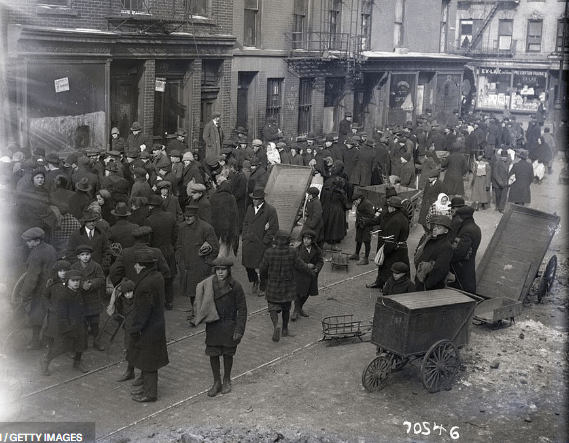
Probably many worried people pictured in that photo from 105 years ago. Yet, everything they were worried about is inconsequential now. How important is the thing I’m concerned about today going to be in 105 years, or 1005 years, or 1,000,000,005 years? I just try to take a wider perspective and just let it go.
Of course sometimes, I can feel too inconsequential, and life can feel pointless. Then I can just take the time to reflect how many things had to happen for this particular consciousness to exist now. How easy would it be to blot myself out of existence by changing one little thing in the past. One heel doesn’t break on my greatn grandfather’s shoe one particular day, and he never meets my greatn grandmother at the shoe repair shop. Suddenly the universe is plunged into a Mike-less reality! It’s not just about the individual. Think of all the factors that allow the Earth to exist and sustain life. The perfect energy of the Big Bang, the Sun able to provide light and heat, the moon to stabilize our gravity. When’s the last time you thanked Jupiter for absorbing all those meteors for us (so ungrateful!)? Anyone witnessing the Big Bang who bet you would be sitting here in this moment reading these words just broke the bank at Las Multiverse Vegas!
Any views on spirituality I have, must conform to my very open-minded view of reality. 2600 years ago, Buddha taught through the dharma about the nature of reality, the existence of “signs” (the everyday things around us that seem real but are not true reality), and “relative truth” and “absolute truth.” Relative truth has nothing to do with “alternative facts” (a.k.a. “lies”). It instead represents the reality we experience daily and come to trust the most, but there is a more real reality in the absolute truth. This all might sound pretty Woo Woo but is actually in line with the modern scientific view of reality and consciousness. I’ll summarize what I learned from David Dunning (of the Dunning-Kruger Effect) on Adam Conover’s podcast Factually!. I’ve only learned a little about this topic, but I’m pretty sure I’ve got it figured out (if you missed the irony there, just click on the Dunning-Kruger Effect link). Basically our brains present us a user interface based on data from our sensory systems. This will make sense to those who remember the days you opened up your computer and saw a black screen with characters that said c:\>
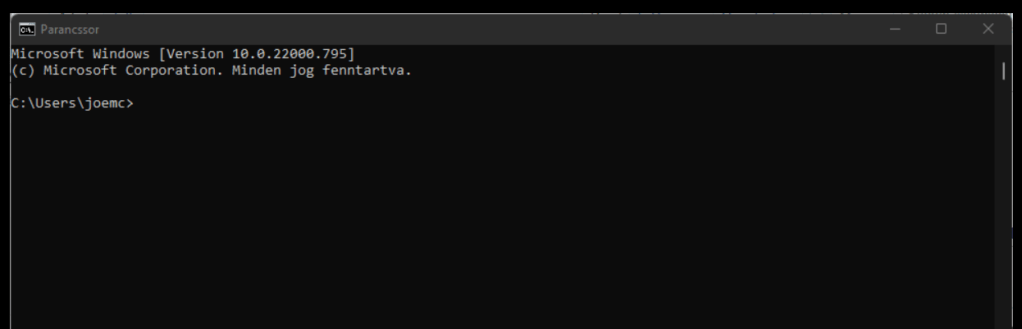
Instead of something that looks like

The absolute truth is that black screen and string of characters. It still exists and is how you actually get to your program. The relative truth is I clicked on picture to bring me to the place that could tell me the name of the actor who played Jethro on the Beverly Hillbillies (don’t click away, it was Max Baer Jr.!). Dunning explains that our brains present us with a version of reality that it not truly the real world but does give us the best chance of surviving in the world. We think we see the smooth, parabolic path of a ball flying through the air at us, but instead our cognition presents a version of the flight that lets us catch it or get out of the way. Besides these revelations, we all understand we see light in the visible spectrum and not all forms of electromagnetic radiation, hear sounds within a limited range, and smell and taste based on what receptors we have. Our “reality” is just a perception of our mind. Once I understood that and stopped grasping and attaching to relative truth, my spiritual understanding of the world opened wide.
The F-Word
So a natural question is what is the role of faith in a evidence-based spirituality. Thich Nhat Hanh (Thay) says in The Heart of Buddha’s Teaching, “Faith (shraddha) in Buddhism, does not mean accepting a theory that we have not personally verified. The Buddha encouraged us to see for ourselves.” (Chapter 21). I don’t see the need for leaps of faith in spirituality. Instead I try to take ideas I am presented at face value, with non-judgement and non-attachment. Learning of the Four Noble Truths, the idea of not needing to suffer anymore was very compelling. Studying it more, I learned of the nature and causes of suffering. I then reflected on my own experiences and recognized all the ways I was responsible for my own suffering. Even when outside events seemed to cause my suffering, it was in fact more about my reaction to them. I chose a diet of suffering through craving and attachment and dismissed the joy that could be present! That is a solid faith based in exploration and experience. This represents just one example but shows how spirituality in the form of openness to absolute truth doesn’t require “blind faith.” A willingness to be open and seeking to understand is sufficient.
Part of my spiritual path lately has taken the form of poetry writing. Here I will share one written reflecting on the nature of faith after reading Thay’s teaching on it.
Once told my faith should be offered
Unquestioning, unflinching, without the benefit of proof
To learn later that faith is built through action
Faith is concrete, found on the path of dharma
When I quiet my mind, the voice of God and the hand of Buddha can be found.
I wish for you to experience pleasant perceptions of the mind and non-attachment to them (or just have a good day)!
 Two Shadows

One response to “Data & Dharma”
[…] you seem to find yourself. Nothing is good or bad, it is simply experience, and (if you read the previous post) you understand that the chances of you existing in this moment to experience it are astronomically […]
LikeLike